Time:
Gold CIP serves as one key technique for extracting gold through cyanidation. It acts as a carbon adsorption method for monovalent gold cyanide [KAu (CN)2] following the cyanide leaching of gold-bearing materials. CIP commonly suits flotation gold concentrate, high argillaceous oxidized gold deposit, mercury mixing, and gravity separation tailings. This approach involves dissolving gold from the ore with cyanide solution. Then, it adsorbs the dissolved gold onto activated carbon particles.
The main difference between CIP and other methods like CIL (Carbon-in-Leach) stems from the order of steps. In CIP, leaching happens first. Adsorption follows afterward. In CIL, both take place at the same time. People often favor the CIP process for its adaptability. It handles various ore types well. Plus, it offers cost savings for big-scale operations.

In today's mining sites, the cip machine and cip process equipment hold a vital role. They help ensure steady work with little interruption. The process excels at recovering tiny gold particles effectively. This quality makes it quite popular in cip manufacturing systems worldwide in the mining sector.
The starting point in any cip gold processing plant is ore preparation. The gold CIP process features seven main operation stages. These include preparation of leaching pulp, cyanide leaching, carbon adsorption, gold-loaded carbon desorption, electrolysis to obtain muddy gold, de-gold carbon recycling, and treatment of leaching pulp.
During ore preparation, crushing and grinding shrink the material size. This step boosts maximum surface exposure for chemical reactions. Grind the gold-containing material to a suitable particle size for cyanidation. That size is usually under 28 mesh. Remove impurities like sawdust. Then, concentrate and dehydrate to reach a pulp concentration of 45%-50%. Hitting this particle size enables strong contact between cyanide solution and gold particles in leaching.
Slurry preparation matters just as much. It guarantees even spread of solids in the liquid medium before reaching leach tanks. The right slurry density improves reaction speed. It also stops settling that might harm recovery rates.
Leaching is the stage where most chemical reactions unfold. The leaching method proves an efficient way to pull out gold. Carbon in pulp (CIP) plant fits well for mainly argillaceous oxidized ore, flotation gold concentrate, and gravity tailings. In this phase, sodium cyanide breaks down metallic gold into soluble complexes. It forms monovalent gold cyanide compounds.
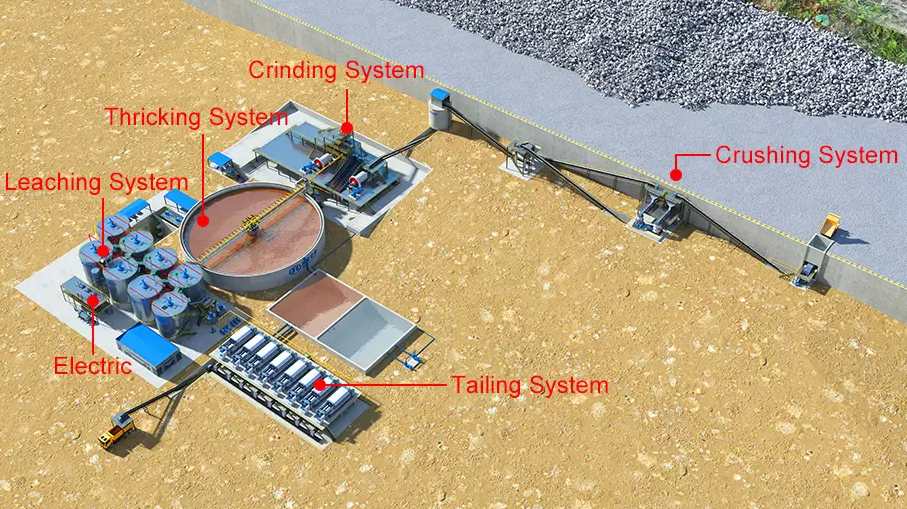
Temperature, pH level, oxygen concentration, and agitation strength all affect reaction efficiency greatly. Normally, keeping alkaline conditions (pH above 10) avoids creating toxic hydrogen cyanide gas. At the same time, it boosts dissolution speeds. Based on ore traits, leaching time can last from a few hours to more than a day. This duration helps reach the best extraction.
After leaching creates a pregnant solution full of dissolved gold ions, adsorption starts. Activated carbon grabs these ions from the solution. Adsorption efficiency relies heavily on carbon activity. That includes its surface area and pore structure. Flow rate through adsorption tanks also plays a part.
To boost recovery in this stage, several adsorption tanks line up in series. They allow counter-current flow between slurry and carbon particles. This setup makes sure of almost full extraction before barren slurry leaves the system. Good upkeep of cip process equipment keeps adsorption performance steady over cycles.
Following adsorption, loaded carbon faces desorption. This releases the captured gold back into solution for refining. In a sealed system, gold-loaded carbon gets quickly desorbed and electrolyzed into muddy gold and lean carbon. Conditions involve high temperature and high pressure. It can smelt the muddy gold into gold ingots after basic pickling and impurity removal.
After desorption, lean carbon needs reactivation before reuse. This keeps its effectiveness in later cycles. The desorbed lean carbon first soaks in 1.5% ~ 2.0% nitric acid solution for 24 hours. This removes calcium. Then, wash it with clean water until neutral. Return to the adsorption cycle.
Thermal regeneration burns away organic contaminants built up from prior cycles. It restores the porous structure key for good adsorption. Impurities such as calcium or organic residues can block activity. So, acid washing followed by heating brings back full capacity. This extends the carbon's life span a lot.
Once regeneration finishes well, the leftover slurry gets final treatment. A filter press handles the leaching pulp. Slag goes through stacking treatment. The water recycles. This step recovers water. It also cuts down environmental impact. Such practices fit with green mining ways.

At Hongji Mine Machinery, we focus on advanced mining solutions. These include top-notch cip manufacturing systems made for varied mineral uses. Our product line includes full sets of crushing, grinding, separation, and drying equipment. They are vital for combined processing lines.
Professional manufacturer of crushers, dryers, and rotary kilns. We offer free design for the entire production line. We provide custom-built systems that suit the client-specific ore features. This setup ensures high recovery efficiency and low running costs.
Our cip process equipment uses strong design standards. It features corrosion-resistant materials fit for nonstop work in tough mining settings. This guarantees reliability and long life over production runs.
Many successful cases show how our solutions increase output. They lower energy use while keeping steady product quality in different site setups. This proves why Hongji Mine Machinery earns trust worldwide. Industrial users rely on us for solid beneficiation tech.
A: Common challenges include maintaining optimal pH levels, managing carbon fouling, ensuring consistent slurry flow rates. These factors directly affect recovery performance and stability during operations.
A: CIP plants use closed-loop systems. They cut down waste streams. They apply non-toxic reagents. Plus, they follow local environmental rules closely. This reduces ecological harm. It supports green resource use strategies well.
A: Yes, plants can adjust easily. You can tweak parameters like leaching time and reagent concentration. Do this based on specific ore mineralogy. Such changes allow flexibility across varied deposit types. This boosts overall operations in modern mining setups. Hongji Mine Machinery experts handle it from design to startup phases smoothly.
Contact Us
WhatsApp:
Email:
Leave A Message

Exploring Gold Heap Leaching in Modern Gold Extraction What is Gold Heap Leaching and How Does It Work? Gold heap leaching represents a hydrometallurgical technique that pulls gold from low-grade ores. It does this by allowing a leaching solution to seep through piled ore heaps. The method includes spreading a cyanide solution over the heap’s top.…

What is the Iron Ore Beneficiation Process? How Does Beneficiation Transform Raw Ore into Premium Concentrate? The iron ore beneficiation process points to a range of tasks meant to boost the standard of raw iron ore. It does so by getting rid of unwanted elements and raising its iron level. That concentrate fits for steel production…

Submit Request

