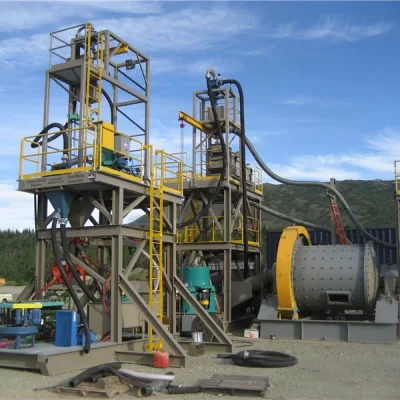
Process Introduction:
Copper Dump Leaching remains a vital, low-cost hydrometallurgical process used to recover copper from extremely low-grade, “run-of-mine” (ROM) ore that would otherwise be considered waste.
Ore Placement: Low-grade ore (often containing less than 0.2% copper) is hauled directly from the open pit and deposited into large "dumps" or "stockpiles," sometimes reaching hundreds of meters in height.

Irrigation: A "raffinate" solution (typically weak sulfuric acid, H₂SO₄) is sprayed or dripped over the top of the dump.

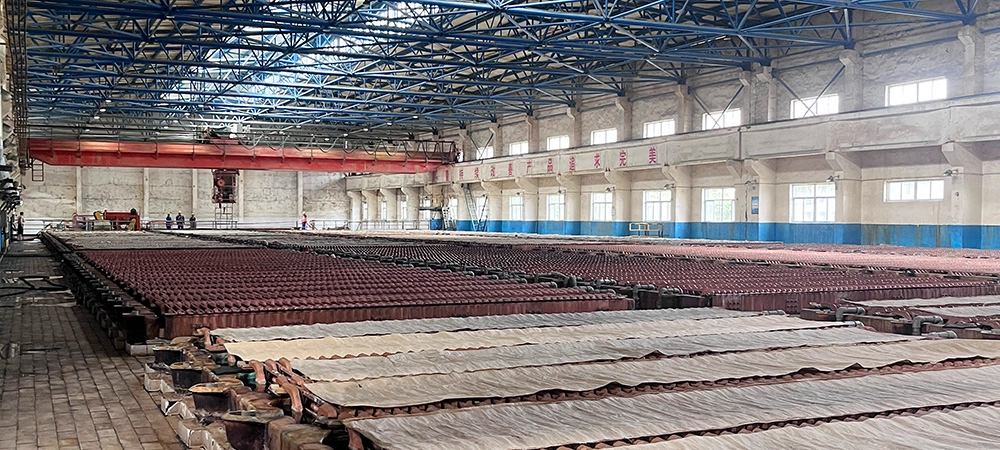
Collection: The "Pregnant Leach Solution" (PLS)—now rich in copper—seeps to the bottom of the dump, where it is captured by a liner system and pumped to a Solvent Extraction (SX) and Electrowinning (EW) plant to produce 99.9% pure copper cathodes.
| Feature | Dump Leaching | Heap Leaching |
|---|---|---|
| Ore Grade | Lowest (often "waste" grade) | Low to Medium |
| Preparation | None (Run-of-Mine) | Crushed and sometimes Agglomerated |
| Recovery Rate | 30% – 60% (very slow) | 70% – 90% (faster) |
| Cost | Minimal (lowest OpEx) | Moderate (due to crushing/handling) |


Submit Request