Time:
Gold leaching serves as a hydrometallurgical method that pulls gold from ore with the help of chemical agents. Basically, it works by dissolving gold into a liquid through oxidation and complexation reactions. These reactions often use cyanide or other options like thiosulfate or glycine. This approach splits useful metals from worthless rock by taking advantage of gold’s chemical behavior under managed settings. Gold recovery through mineral processing aims to maximize the efficient extraction of gold from the ore.
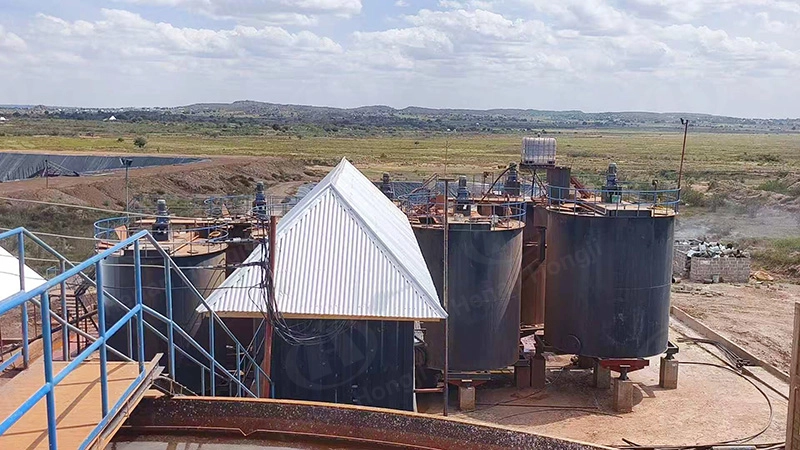
The leaching technique is widely used and effective in mineral processing, especially for extracting gold. The success of this chemical ore leaching hinges on elements such as ore makeup, particle dimensions, and agent strength. Tinier bits reveal greater surface area to the leach liquid. This boosts dissolution speeds. However, it might raise running expenses because of the need for finer milling.
A gold leaching plant runs through various connected phases:
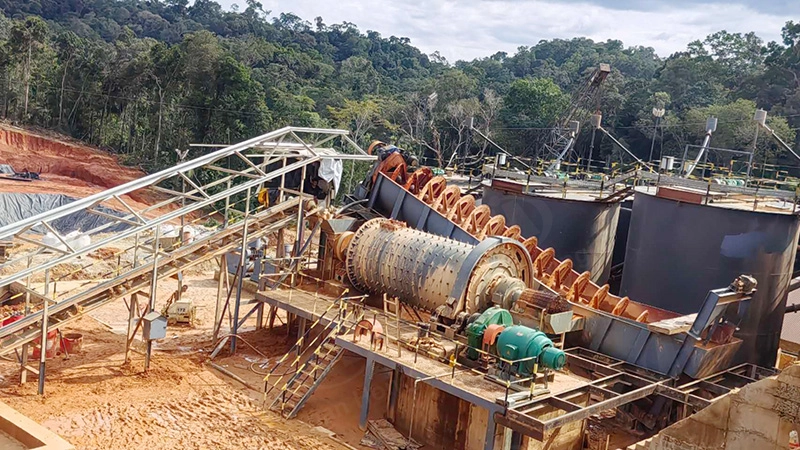
Crushing and Grinding: Workers crush and mill ore into small bits to boost the visibility of gold surfaces. Mill the gold-bearing stuff to a size fit for cyanidation, usually under 28 mesh. Hongji Mine Machinery provides advanced milling equipment, such as ball mills and rod mills, which ensure a consistent particle size before leaching. This step plays a crucial role in optimizing gold recovery through proper mineral processing techniques.
Leach Solution Preparation: The ready pulp mixes with agents in leach vats or pile setups. Just like the standard cyanidation approach, it typically involves 5-8 mixing vats. In pile leaching arrangements, low-quality ores get piled on waterproof bases. There, cyanide or harmless liquids filter through the stack. The core step is to break low-grade gold ore into a set size (or form granules). Then, stack it on a leak-proof base made from asphalt, plastic, or similar materials. Next, apply low-strength cyanide, basic liquid, non-toxic solvent, or other solutions to spray the ore pile. This dissolves the gold.
Adsorption and Recovery: Once dissolved, gold particles in the liquid get captured using activated carbon or resin setups. Add carbon to the leaching vat. The carbon soaks up the gold from the pulp to form gold-loaded carbon. Later, desorption electrolysis setups pull out pure gold for further cleaning into bars.
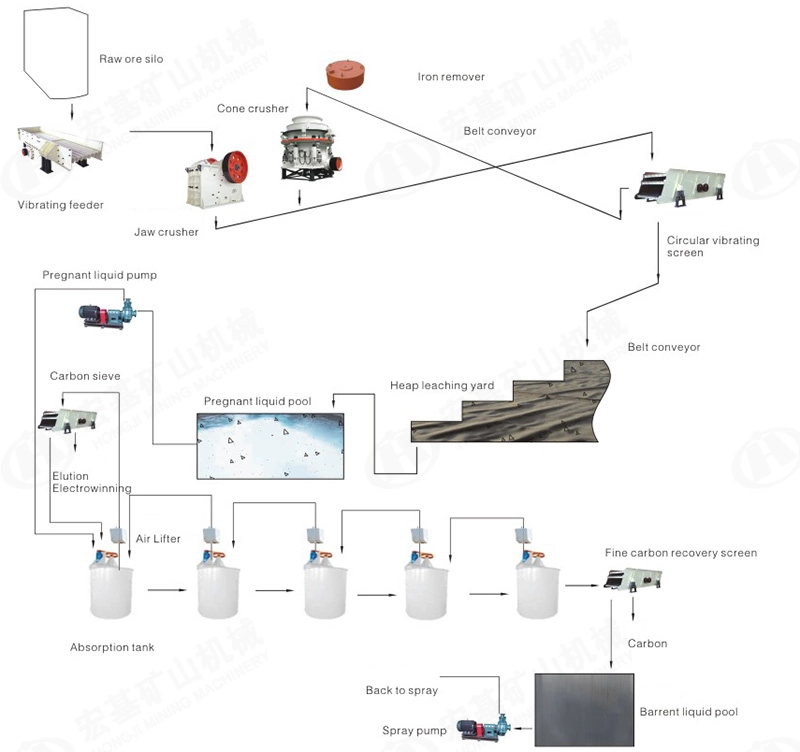
The flowchart above shows the main process of a gold leaching plant, including ore crushing, screening, leaching, solution collection, carbon adsorption, and barren solution recycling. It helps to understand how each stage is connected to improve gold recovery efficiency.
Chemical performance in a gold leaching plant relies on keeping ideal agent levels and steady settings in every leach vat. pH management stops unwanted buildup. Meanwhile, temperature checks speed up reaction rates. Automated adding systems deliver exact amounts of agents to all vats. This ensures full mixing between bits and liquids. Continuous monitoring with specialized gold leaching tools allows operators to identify and adjust parameters quickly, improving gold recovery performance.
Before starting cyanide leaching or pile leaching, ores might go through pre-treatment steps like roasting or bioleaching. Such techniques break apart tough minerals that trap tiny gold bits. Clearing out sulfides and organic stuff improves flow. As a result, liquids can reach deeper into ore layers. Overall, metal pull-out rates rise a lot.
The mix of grind size and handling length matters greatly in boosting recovery while controlling costs. Finer milling raises surface access but uses extra power. On the other hand, rougher stuff cuts milling time. Yet, it may lead to partial dissolution in hydrometallurgy tasks.
Today’s plants blend digital controls for instant process oversight. Automated setups manage flow speeds, heat levels, agent input, and air supply in each leach vat or pile system. Live sensors gather work data. This aids in forward-looking upkeep plans—cutting stoppages while keeping steady results. Such control cuts human mistakes. It also steadies plant yield even with changing input conditions.
To cut environmental harm, many sites now use closed water loops. These reuse process liquids and lower agent waste. Other agents like thiosulfate or glycine appear as better picks over cyanide for chemical ore leaching. Plus, proper tailings handling makes sure leftover cyanide or heavy metals avoid polluting nearby areas.
Hongji Mine Machinery’s pile leaching tech stresses green practices via water reuse setups and less agent use. Barren solution returns to the spray system for recycling.
Power savings form a key aim in current hydrometallurgy planning. Upgraded ball mills with speed-changing drives drop power needs during breaking stages. Heat reuse units grab extra energy from heat-making reactions in desorption paths. This energy goes back into other plant parts. Adding green power sources also backs lasting run models that match world eco rules.
At Hongji Mine Machinery, we focus on building full systems that pair strong chemical handling with solid machine strength. For over 10 years, our process planning group has gained deep knowledge in mineral handling, site engineering, energy, controls, basic designs, water flow, tailings, eco protection, and more. Our specialists have handled thousands of mine jobs around the globe—from tiny add-on units to large-scale processing sites—dealing with metals such as gold, silver, copper, limonite, and hematite.
We offer full packages including breaking units, milling machines, mixing vats, capture columns, desorption-electrolysis units, and cleaning gear—all tuned for top recovery success.
Our add-on designs permit easy setup in varied mine spots—from hilly lands to dry areas needing pile leach plans. Every add-on blends high-output reactors. These guarantee even agent spread during cyanide leaching or other ways like bioleaching.
For instance, our Peru 150t/d Gold CIL (Carbon-in-Leach) project used crushers, ball mills, mixing leaching vats with activated carbon capture columns. It achieved great recovery outcomes. Likewise, we've had a300t/d Suriname project hit with mixed gravity split plus pile leach tech.
A: Cyanide stays the top agent because of its powerful skill to dissolve pure gold well in hydrometallurgy tasks. Yet, thiosulfate or chloride-based agents gain ground for greener processing paths.
A: Time differs based on ore kind and strength levels. But it often spans from a few hours to several days. This continues until full dissolution in each line of leach vats or piles.
A: Yes. Our small add-on plants suit scaling. So, lesser runs can reach factory-level recovery without huge money outlay—making pro-grade cyanide leaching open even at small output sizes.
Contact Us
WhatsApp:
Email:
Leave A Message

What Is Elution in Gold Processing and Where Does It Fit? In a carbon-in-pulp or carbon-in-leach flowsheet, adsorption loads activated carbon with dissolved gold complexes. A gold elution plant sits after carbon recovery and before the gold room: it removes adsorbed gold, sends solution to electrolysis, and prepares lean carbon for reuse. Elution in gold…

A copper refinery plant receives copper that has already passed through concentration and smelting. However, this metal is not yet ready for demanding electrical or manufacturing uses. The refinery carefully prepares anodes. It then transfers copper electrochemically to cathodes. During this stage, the facility manages impurities and carefully checks the finished sheets. This exact sequence…

Submit Request

