
Contact Us
WhatsApp:
Email:
Leave A Message
Process Introduction:
However, the magnesite flotation process is an important mineral processing method that can extract valuable magnesium carbonate from the ore. The core of the process is to use the principles of surface chemistry and selective adsorption to separate the desired minerals from unwanted impurities effectively.
In order to remove harmful impurities and improve the crystal grade of ore, solve the separation problem of silicate gangue minerals and magnesite and magnesite and dolomite, magnesite flotation is an important purification method.
Crushing and screening stage
The vibrating feeder sends the raw materials of magnesite with a particle size of less than 200mm to the jaw crusher for crushing, which is then crushed to a smaller particle size by the impact crusher and enters the circular vibrating screen for screening. If the particle size of 10mm does not meet the grinding requirements, it will be re-entered into the crusher for crushing to 0-10mm.

Grinding and classification stage
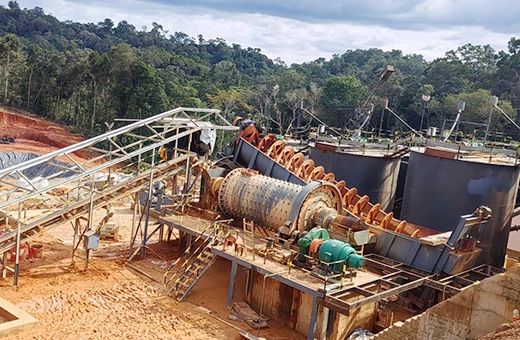
Grinding and classification are very important for the flotation process. Grinding fineness is an essential factor affecting the sorting index. Appropriate grinding fineness can effectively dissociate the target and gangue minerals. After crushing, the ore less than 10mm enters the ball mill for monomer dissociation, and two-stage grinding or three-stage grinding is often used. The grinding particle size requirement is 200 mesh, accounting for more than 70% of the total.

Flotation stage
The main mineral processing equipment used in the separation stage of flotation process is flotation machine, mixing tank, and thickener. The use of a single reverse flotation process cannot effectively remove impurities in the ore, and the magnesium oxide content of the selected magnesium concentrate is still as high as 0.35%. Therefore, the magnesium ore flotation process is generally composed of reverse flotation (one coarse and one sweep) and direct flotation (-coarse-fine). Reverse flotation selects all tailings; direct flotation obtains magnesium concentrate and middlings. Magnesite is ground into magnesite powder by a ball mill, and is sent to a mixer to mix with flotation reagents, and then flotation and reverse flotation are carried out. In the thickener, the mineral particles in the slurry form flocs to reduce the water content.

Drying stage
The water content of magnesium ore after flotation is very high. After concentration, the water content is reduced, but it cannot be used for industrial use. Therefore, a dryer is required to completely dry the magnesium powder. Different processes are adjusted according to the specific conditions of the ore to achieve the optimal quality of the finished magnesium metal product.





Submit Request


